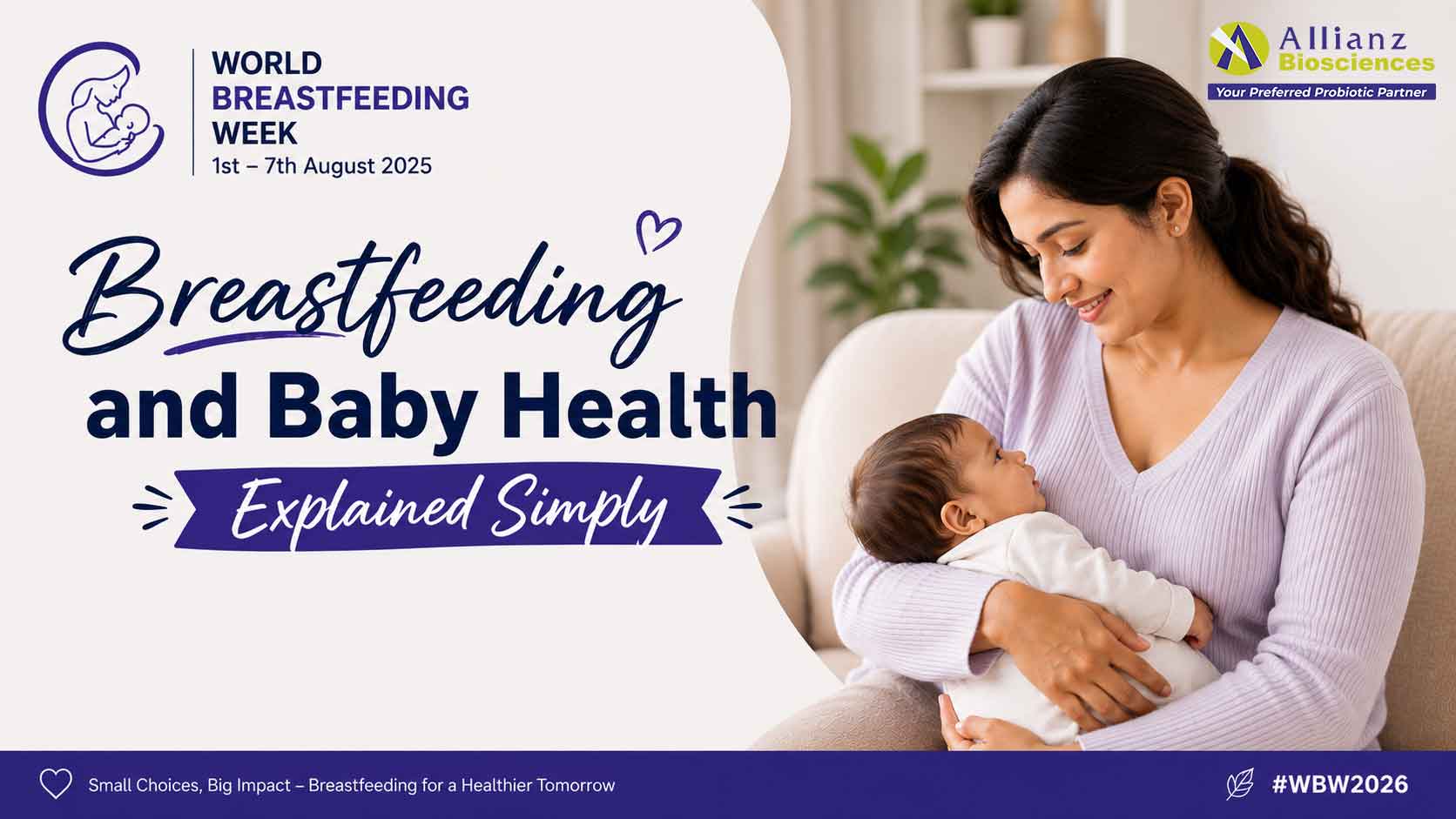
Why breastfeeding matters for infant health
Human milk is the normative standard for infant feeding because it delivers not only calories and nutrients but also immune factors, hormones, and genetic regulators that formula cannot fully replicate. These components work together to lower infection risk, support gut maturation, and promote healthy growth and brain development.
Clinical evidence: what studies show
Large clinical reports and systematic reviews consistently find that breastfeeding reduces infections (diarrhoea, respiratory illness, ear infections), necrotising enterocolitis in preterm infants. These findings underpin global guidelines recommending exclusive breastfeeding for about 6 months, continued alongside complementary foods for 2 years or beyond.
Preterm and underweight babies: a special advantage
For very low birth weight (VLBW) and preterm infants, mother’s own milk is the optimal nutrition source. It reduces serious complications like necrotising enterocolitis and late onset sepsis, and supports better neurodevelopment and growth when appropriately fortified. When a mother’s milk is insufficient, pasteurised donor human milk is recommended over formula.
Early protection against behavioral and emotional problems
Breastfeeding in the first months may also protect mental health. One recent study found that any breastfeeding for 1–4 months was linked to lower emotional reactivity, anxiety/depression, withdrawn behaviour, and aggression at age 4. This suggests that early, consistent breastfeeding can help shape calmer emotional regulation during preschool years.
Bonding and the hidden role of smell
Breastfeeding strengthens the mother–infant bond through skin to skin contact and odour exchange. Newborns can smell their mother’s breast within minutes of birth and use this scent to locate the nipple and feel comforted. This “smellscape” reduces crying and stress, supports early latch, and helps build attachment.
miRNAs: tiny messengers with big effects
A cutting edge discovery is that breast milk is rich in microRNAs (miRNAs)—small molecules that regulate gene expression. Over 1,400 mature miRNAs have been identified in human milk, many packed in protective vesicles that survive digestion.
How miRNAs shape infant health
These miRNAs influence immune maturation, gut development, metabolism, and even brain growth. For instance, milk miRNAs can modulate B cell function, support healthy adipose tissue development, and help program long term metabolic health. In this way, breast milk acts as an epigenetic “instruction manual,” gently tuning the infant’s genes during the critical first 1,000 days.
Short term and long term benefits in infants
Short term: fewer infections, better gut health, reduced hospital stays (especially for preterms), and improved bonding.
Long term: lower risks of obesity, type 1 and 2 diabetes, asthma, high blood pressure, and some childhood cancers.
The essence of breastfeeding awareness
Breastfeeding is a public health imperative: it saves lives, prevents disease, and builds the foundation for a healthier generation. Supporting mothers with timely lactation help, skin to skin contact, and access to human milk (including donor milk when needed) ensures every baby—especially the smallest—gets this irreplaceable start.
Reference:
https://publications.aap.org/pediatrics/article/157/2/e2025073625/206082/Promoting-Human-Milk-and-B…
https://link.springer.com/article/10.1007/s00431-025-06666-9
https://academic.oup.com/nutritionreviews/advance-article/doi/10.1093/nutrit/nuaf289/8466575
https://www.thelancet.com/journals/ebiom/article/PIIS2352-3964(25)00536-5/fulltext